
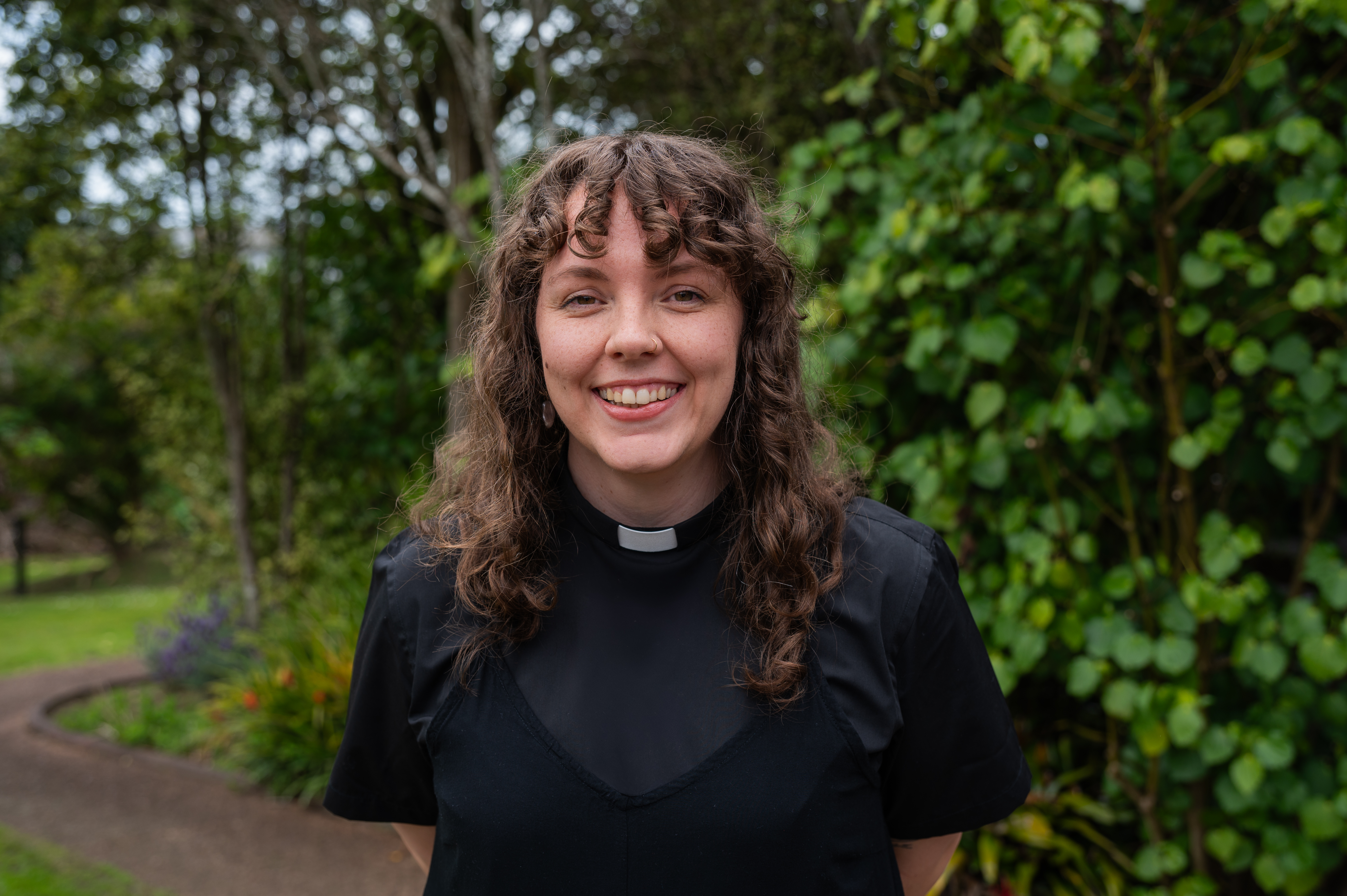
Grace Behm is a curate at St Matthew-in-the-City,
Auckland, Aotearoa/New Zealand.
“We were not created to be survivors. We were created to have life. And what climate change does is challenge life.”
These words by Archbishop Julio Ernesto Murray of Panama echo a profound truth about our current climate crisis. He recounts the story of the Guna people, an Indigenous community living on the San Blas Islands off the Atlantic coast of Panama, who have been forced to abandon their ancestral land due to rising sea levels. Their story reflects a painful reality, leaving behind history, heritage, and the land they’ve called home since the 16th century.
Unfortunately, the story of the Guna people is not unique to Panama. Similar scenarios are unfolding across the Pacific. In Tokelau, rising sea levels are already encroaching on the islands, threatening food security and freshwater supplies. In Kiribati, entire villages have been relocated due to coastal erosion. In Fiji, communities such as Vunidogoloa have been forced to move inland as their homes succumb to rising tides.
My homeland, Aotearoa New Zealand, is also not immune to the impacts of climate change. Rising sea levels, extreme weather events, and biodiversity loss threaten both the land and the way of life for many communities. The place I call home is more than just breathtaking scenery; it is a land that gets under your skin in the best way. It’s the morning mist clinging to the hills, the rivers carving through valleys, always moving, always alive. I’ve grown up surrounded by this, by the towering kauri trees that seem to hold the weight of time in their branches, by the tūī singing in the pōhutukawa, and by the ever-present sound of water, whether it’s the roar of the ocean or the quiet gurgle of a stream weaving through the bush.
The land here has a presence. You feel it when you stand beneath a sky full of stars in the middle of nowhere, or when you wade through an ice-cold river that’s been flowing for generations before you. The water, the forests, the mountains, they aren’t just part of the scenery; they’re part of us. Our streams and rivers aren’t just waterways; they’re the lifeblood of the land, sacred to Māori as wai tapu. They connect everything, from the high alpine lakes down to the moana, the sea, where the currents carry stories as old as time. Living here, you don’t just see nature, you’re part of it. Whether it’s gathering kai moana along the coast, tramping through native bush, or just watching the way the light shifts over the hills, there’s a constant awareness that this place is alive. And with that comes responsibility. Māori call it kaitiakitanga, the duty of care for the land and waters. It’s about understanding that we don’t own this place; we belong to it. And if we look after it, it will continue to look after us, just as it always has.
In August 2024, I had the privilege of attending the Moana Water of Life conference in Suva, Fiji, a region already bearing the brunt of climate change. At this conference, speakers such as Archbishop Julio, Archbishop Emeritus Winston Halapua, and Rev. James Bhagwan spoke passionately about the need for the Church to help build resilient communities and ecosystems, emphasising the importance of elevating Pacific voices in global discussions on climate justice. What resonated with me most, however, was the stark reminder of our physical location. As we gathered in Suva, surrounded by the vastness of the ocean, we stood at the frontline of the climate crisis, a place where rising seas and extreme weather events are already displacing entire communities.
For the Guna people, and many others like them, climate change is not an abstract concept or a distant threat. It is happening now. Lives are being uprooted, histories erased, and cultures fragmented. In this setting, the urgency of the discussion was not just felt in the words exchanged at the conference, but in the very land we stood upon. The Church’s mission, we were reminded, is not merely to help people survive; it is to ensure they can thrive. And yet, thriving feels increasingly out of reach for the world’s most vulnerable populations.
A recurring theme throughout the conference was that the nations suffering most from climate change are also the ones that have contributed the least to the problem. Places like Tokelau, Kiribati, and Fiji are paying the price for the actions of wealthier nations that have long benefited from industrialisation, deforestation, and carbon emissions. The developed world continues to reap the rewards of environmental exploitation while those with fewer resources face devastating consequences. The privilege of wealthier nations allows them the luxury of choice. The choice to delay meaningful action, the choice to prioritise convenience over sustainability, and the choice to protect their economies and infrastructure from environmental damage while other nations are left to fend for themselves. This stark imbalance underscores the bitter irony: those least responsible for the climate crisis are the ones suffering the most, while those most responsible have the resources to shield themselves from its worst effects.
In this context, the call for climate justice becomes not just a demand for emission reductions but a cry for accountability, equity, and reparations. It is a plea for recognition that those who have historically contributed to the crisis must now take responsibility for the cost paid by those least equipped to bear it.
At times, it’s easy to feel overwhelmed by the enormity of the climate crisis and the slow pace of action from governments and corporations. The weight of loss, whether it’s species extinction, burned forests, or displaced communities, can lead to frustration and a sense of powerlessness. But this grief is not a sign of defeat; rather, it reflects our deep connection to the earth and to each other. It is a reminder of the sacredness of creation and of what is at stake. Grief helps us to cherish what remains, and from that grief, a renewed sense of purpose can emerge.
While we may feel powerless as individuals, the truth is that collective action, rooted in love, justice, and shared responsibility, can lead to meaningful change. Yes, it’s important to pause, reflect, and grieve for what we’ve lost, but after that grief, we must rise with renewed strength to sow the seeds of the future we long for.
Here, the Parable of the Mustard Seed offers a helpful analogy. Though the mustard seed is one of the smallest of seeds, when sown and nurtured, it grows into the greatest of shrubs, offering shelter to the birds of the air. In the same way, our individual actions—no matter how small—have the potential to grow into something mighty. Whether it’s reducing plastic use, composting, advocating for climate justice, or simply using public transport, each small step adds up.
When my small seed of action is combined with yours, the collective impact can be great. These seeds of climate justice, once sown, have the power to create lasting change, providing life and protection for the most vulnerable communities.
Grief and action, then, are intertwined. We grieve because we care deeply about the earth and its people, and from that grief springs the determination to plant small seeds of hope. Though we may not see the fruits of our labour immediately, the seeds we plant today will grow into something much greater, ensuring life, protection, and renewal for future generations. Let us rise from our grief and sow the seeds of a better tomorrow.

Image: Hokitika Gorge, Hokitika, New Zealand.
Photo by: Peter Cox Photography (www.petercoxphotography.com)

Image: Haupapa Tasman Lake, Aoraki Mount Cook, New Zealand.
Photo by: Peter Cox Photography (www.petercoxphotography.com)

Image: Aoraki Mount Cook, New Zealand.
Photo by: Peter Cox Photography (www.petercoxphotography.com)
Leave a Reply